A Summary of Evidence for Technology in Education
There is considerable debate about the role of technology in education. School leaders are fielding urgent questions from their communities: Is technology helping or harming students? Why aren't test scores improving? Should schools return to paper and pencil?
Research is clear. Edtech benefits learning when it is well-designed, well-implemented, and aligned to clear learning goals. This guide summarizes the evidence and answers the questions school leaders hear most.

Four Findings That Cut Across the Evidence
Four themes consistently emerge across the evidence. These cross-cutting principles shape how we should think about technology in education as they carry direct implications for evaluating edtech tools, planning implementation, and communicating with teachers, students, and families.
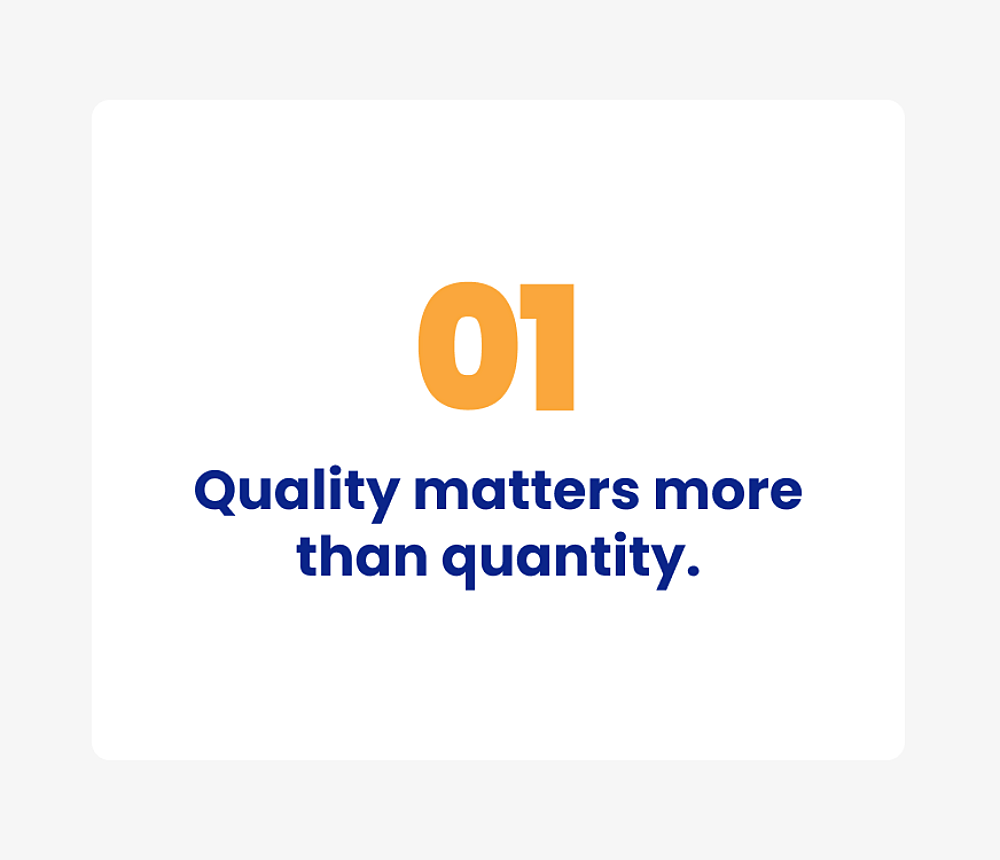
Educational technology products built in accordance with how people learn offer distinct advantages for academic learning (e.g., Feng, 2025; Hillmayr et al., 2020), while poorly built educational technology adds unnecessary cognitive load, thus inhibiting learning and academic performance (Støle et al., 2020). The quality of the product matters dramatically.
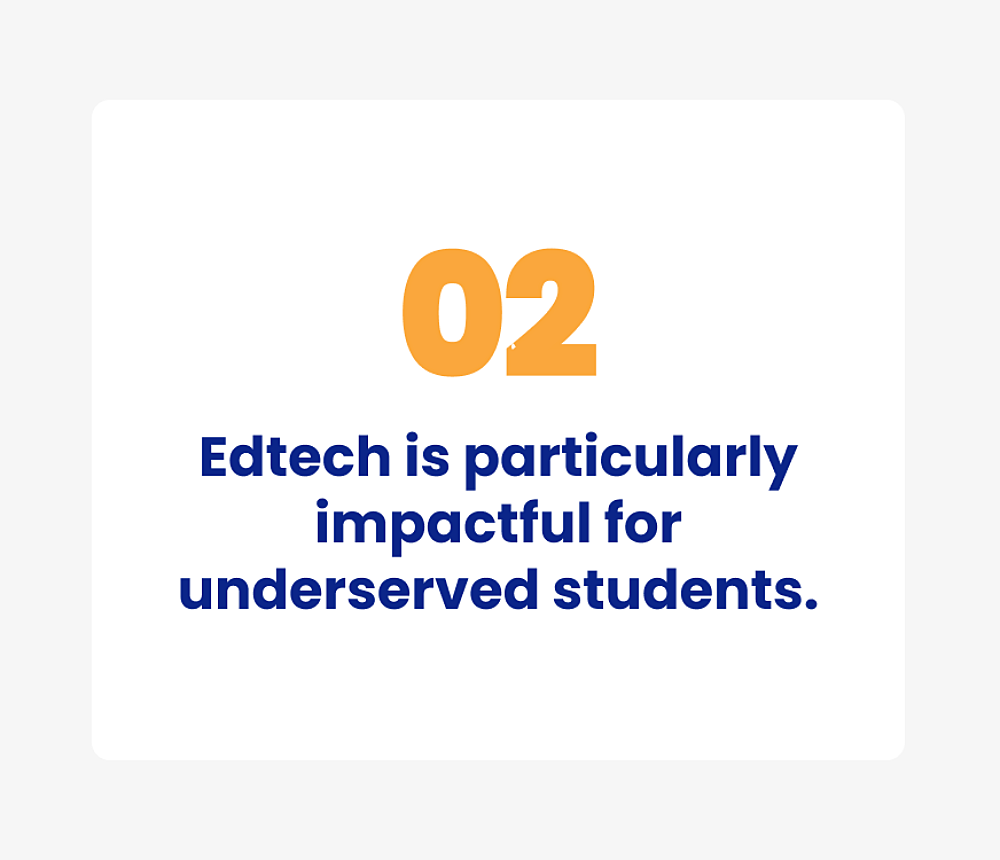
Students with disabilities, multilingual learners, and students performing below grade proficiency often show disproportionately large gains from well-designed tools. For these students, technology is not simply a supplement to learning but an essential means of access, opportunity, and participation (Di Pietro & Castaño Muñoz, 2025; Lee et al., 2022; McKissick et al., 2018).
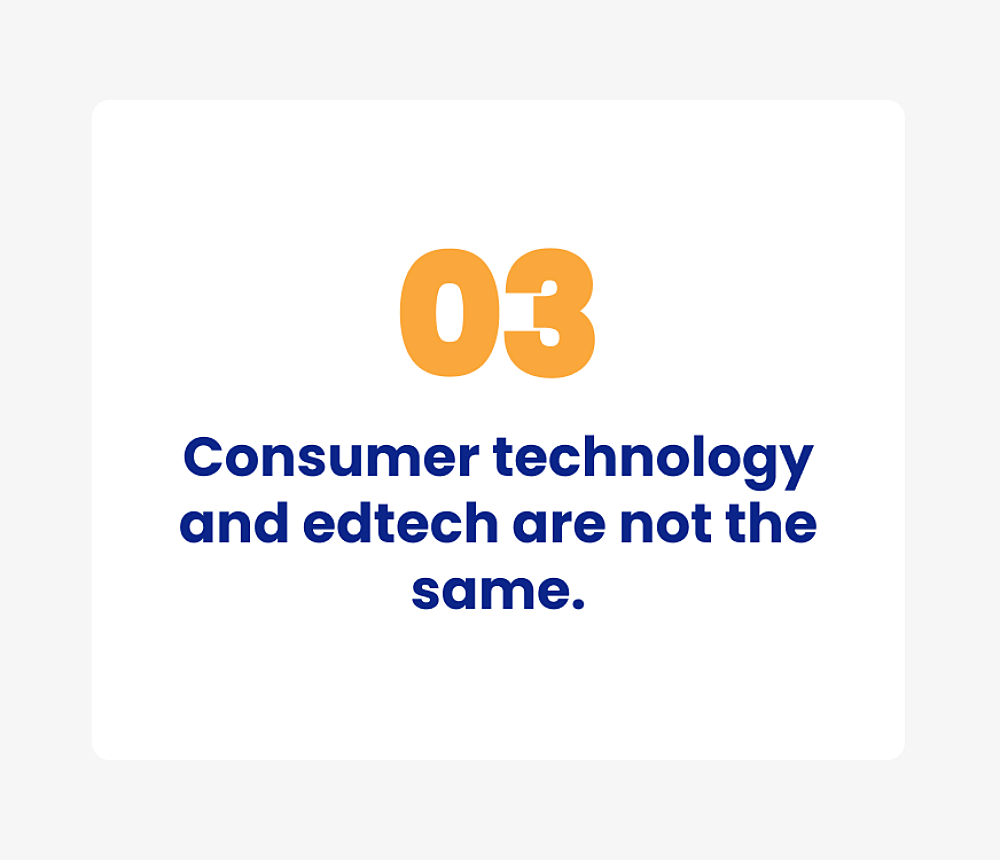
Edtech, built by learning designers, operates from different incentives, learning strategies, and desired outcomes than commercial platforms engineered for intensive engagement. Research on social media or other consumer/entertainment tools does not necessarily apply to educational tools (American Academy of Pediatrics, 2025).
Alongside product quality, implementation factors (e.g., Kohler et al., 2022) significantly affect how edtech influences student learning. Factors such as teacher preparation, curriculum alignment, and learning setting all affect how well any given product helps students learn (Bernard, 2018; Nordmark et al., 2024; Wu, 2024). As with any educational program or intervention, implementation must fit the local context.
Get the Edtech Evidence Research Guide
Download the complete evidence summary with research citations and implementation guidance.
Build Your Implementation Strategy
Address the five most common gaps in edtech implementation:
Establish Responsible Use Policies
“Not establishing plain-English/age-appropriate tech norms.”
Distributing devices is just the start. A Responsible Use Policy sets clear, age-appropriate expectations that help students engage with technology purposefully and safely.
Teach Healthy Tech Use
“Not explicitly teaching digital citizenship.”
Research shows children need explicit instruction — not just access — to develop healthy technology habits. Use these free, ready-to-use lessons to build the digital citizenship skills students need to engage purposefully and safely online.

Select Edtech Tools with Confidence
“Not ensuring evidence of effectiveness before selecting edtech apps.”
Not all edtech is created equal. The EdTech Index helps you vet tools before you bring them into the classroom, so every app you select has evidence of effectiveness behind it.

Strengthen Teacher Edtech Skills
"Not sufficiently supporting teacher training around technology use"
Research is clear: how technology is implemented matters more than the technology itself — and that starts with teachers. This certification helps K–12 educators move beyond tool training and into intentional learning design that drives real outcomes.

Build Edtech Leadership in Your School
“Not having certified/credentialed edtech leaders”
Good edtech implementation doesn't happen by accident — it requires credentialed leaders who know how to drive it. This certification builds the expertise to lead technology integration that puts student learning first, across your whole school or district.
Schools deserve edtech that's safe — and actually supports learning.
Schools need to keep students safe and use edtech in purposeful ways that support teaching and learning. That's why ISTE and GreatSchools are partnering to launch the Safe and Purposeful EdTech School Pledge.